
Photobiomodulation Therapy for Dry AMD
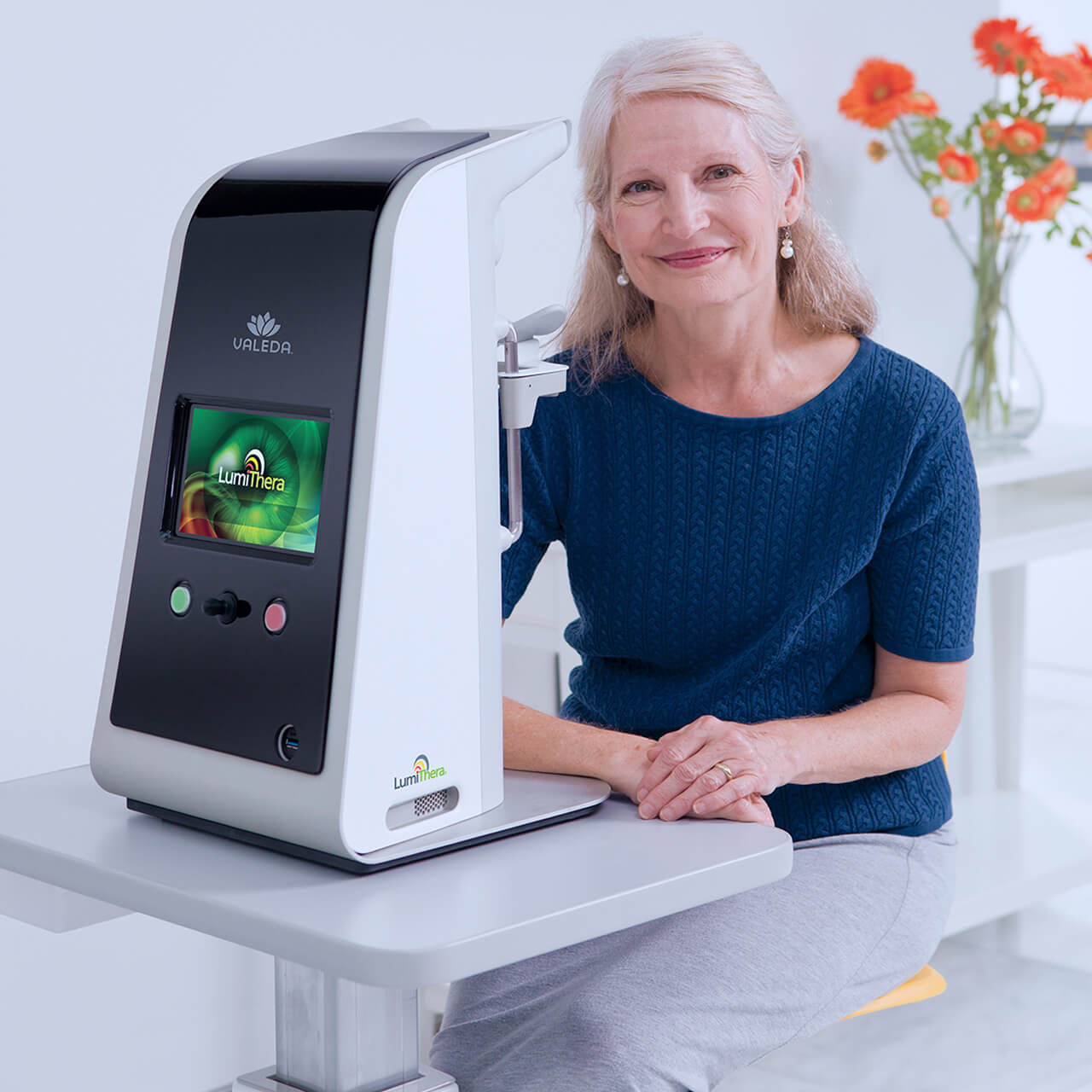
Valeda® Photobiomodulation (PBM) Therapy
Historically, dry AMD has been very challenging to treat, with nutritional supplements offering only limited benefit. PMB therapy- primarily using red and near-infrared light has already shown potential benefits in other areas of medicine and is now gaining attention in eye care. It has been in use in Europe for many years. Current research suggests the greatest impact is seen in patients in the earlier stages of dry AMD, particularly those with drusen deposits (yellowish material beneath the retina), rather than those with advanced tissue loss (atrophy).
How Photobiomodulation Works
Photobiomodulation is believed to support the eye through several key mechanisms. It may enhance blood circulation within the retina and surrounding tissues, encourage the release of nitric oxide—a molecule essential for healthy blood vessels—and boost the activity of mitochondria, the cell's energy producers. This mitochondrial stimulation occurs through an enzyme called cytochrome c oxidase, which helps generate the energy needed for cell repair and function.
Valeda is a treatment for all stages of dry AMD as the first approved treatment for Dry Age-Related Macular Degeneration (AMD) using photobiomodulation.
The best candidates are patients with early signs of dry AMD who still maintain a visual acuity of 20/70 or better. If not addressed, AMD can progress and is one of the primary causes of permanent vision loss in individuals over the age of 60.
Recognize the Symptoms Associated with AMD
Changes in your vision can affect daily life, and noticing them early is key. AMD may be progressing if you experience symptoms like:
- Straight lines appearing wavy
- Difficulty seeing at night
- Blank or blurry spots in your central vision
- Words that appear fuzzy or colors that seem faded
Symptoms can vary from person to person and may develop gradually. If you notice any of these changes in your vision, consult your eye doctor promptly.
About Your Treatment
During each session, you will be seated comfortably in front of Valeda and guided through
each step of the treatment. The active treatment time is less than 5 minutes per eye per session.
Treatment timeline
- Schedule: Each treatment round includes 9 sessions over 3-5 weeks
- Frequency: Treatment rounds are typically repeated every 4 months, as
recommended by your retina specialist. - Technology: Uses three different wavelengths of light (590 nm, 660 nm, and 850 nm).
- Comfort: Clinical trials in the U.S. and Europe reported no discomfort or side effects.
If you have been diagnosed with dry AMD, your retina specialist can help determine whether Valeda photobiomodulation therapy may be appropriate for you.
Ask your physician if this treatment is right for you. Valeda photobiomodulation treatments are now available at our Boca Raton retina center.